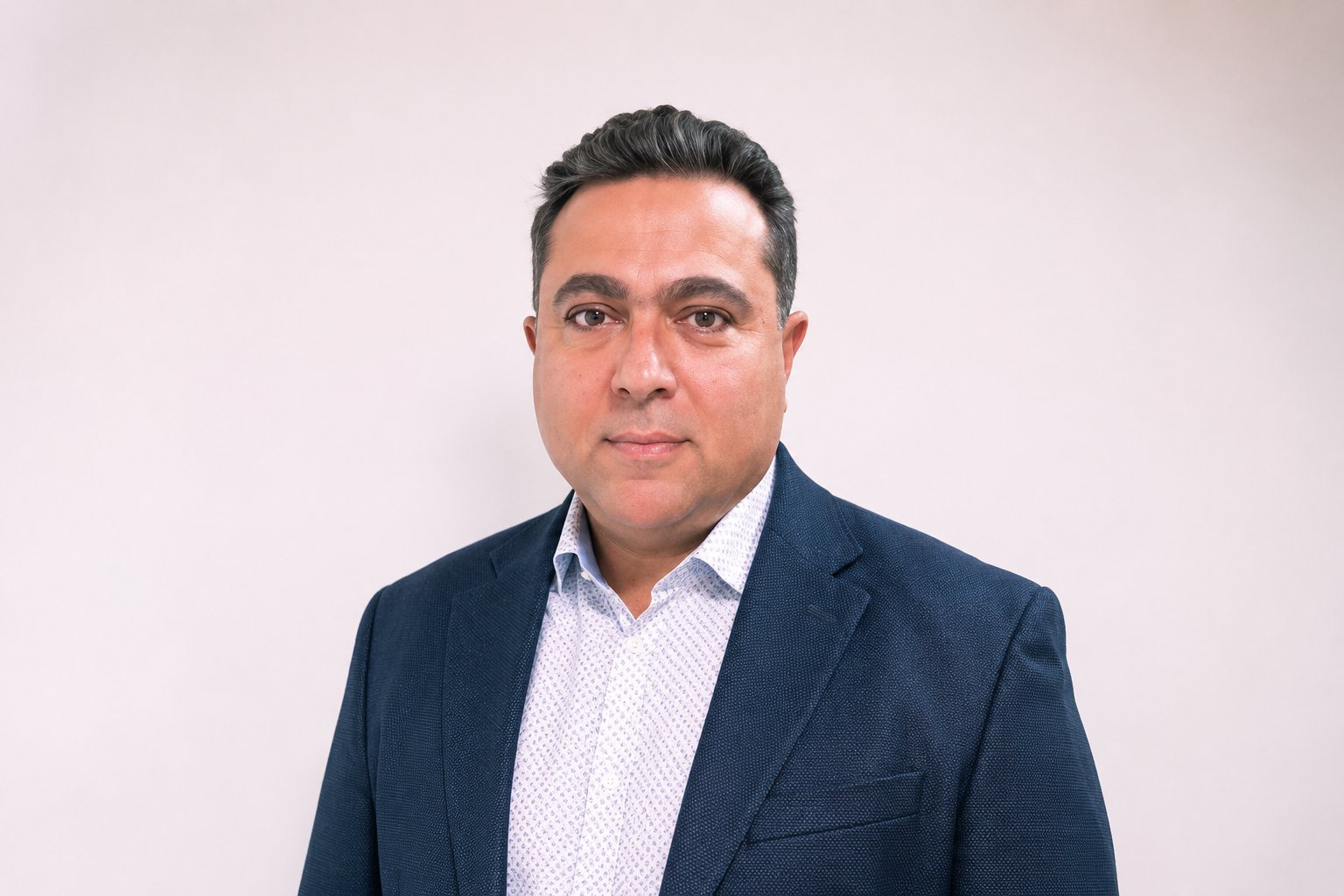
Why Mike Kropp’s work with Iridius matters right now
Artificial intelligence is moving fast, but not every industry can move at the same speed. In sectors like life sciences, pharmaceuticals, healthcare, and other regulated markets, companies cannot simply plug AI into daily operations and hope for the best. They need proof. They need controls. They need records that show what happened, why it happened, and whether the right rules were followed.
That is the problem Mike Kropp is taking on with Iridius.
As the CEO and co-founder of Iridius, Kropp is building a company around a practical but difficult question: how can enterprises use AI in real workflows without losing control of compliance? The answer Iridius is working toward is continuously compliant AI. Instead of treating compliance as a review step after a system is built, Iridius wants compliance to be part of how AI systems are designed, operated, monitored, and improved.
This matters because many enterprises are already testing AI. They are building pilots, running experiments, and exploring AI agents that can help with research, regulatory work, quality processes, internal operations, and customer-facing tasks. But in regulated industries, a working demo is not enough. If a company cannot validate the system, track its decisions, and show auditors that proper controls were in place, the project often stays stuck in pilot mode.
That gap between AI ambition and real-world deployment is where Iridius is trying to build its place.
Who is Mike Kropp
Mike Kropp is not approaching AI compliance as a casual trend. His background is rooted in enterprise technology, product leadership, and large-scale systems. Before starting Iridius, Kropp spent more than two decades in engineering and product leadership roles at Microsoft and later worked at Amazon Web Services.
That kind of experience matters for the market Iridius is targeting. Enterprise software is rarely just about clever features. It has to work inside messy organizations with existing systems, internal policies, data controls, security reviews, procurement requirements, compliance teams, and business users who need dependable outcomes.
Kropp’s work with Iridius reflects that understanding. The company is not simply building another AI assistant. It is focused on the infrastructure layer that can help regulated enterprises bring AI into production with more confidence.
The founding and leadership team around Iridius also reflects a deep enterprise background. The company has leaders with experience across organizations such as Microsoft, AWS, Amazon, and OpenAI. That matters because the challenge is not only technical. It is operational. Iridius has to understand how large companies think, how regulated teams work, and what it takes for AI to earn trust beyond a proof of concept.
What Iridius is building
Iridius describes itself as a compliance-by-design AI platform for regulated workflow execution. In plain language, that means the company is building technology that helps enterprises create AI systems where compliance is built into the workflow from the beginning.
The idea is simple to understand but hard to execute. Most companies already have rules. They have regulatory standards, internal policies, standard operating procedures, approval steps, quality checks, and documentation requirements. The problem is that much of this information lives in documents, spreadsheets, manuals, and disconnected systems.
Iridius aims to turn those rules into structured logic that AI systems can follow. Instead of asking teams to manually check whether an AI workflow followed the right process after the fact, the platform is designed to make compliance part of the actual execution of the workflow.
For example, an AI workflow in a pharmaceutical company may need to follow strict rules around documentation, review, approvals, safety reporting, data handling, or regulatory submissions. Iridius wants to make those requirements active inside the workflow, not buried in a policy document that someone remembers to check later.
That is the heart of compliance-by-design AI.
Why continuous compliance is different from traditional compliance
Traditional compliance often works like a checkpoint. A team does the work, gathers documentation, sends materials for review, and then tries to prove that everything was done properly. This can work in slower, more manual environments, but it becomes harder when AI systems and AI agents are making workflows faster and more dynamic.
Continuously compliant AI takes a different approach. It asks whether the system can follow rules as it runs, create evidence while work happens, and keep a clear record of decisions, actions, and approvals.
For regulated enterprises, that shift is important. AI systems are not always predictable in the same way as older software. They may summarize information, recommend actions, draft documents, trigger workflows, or support decisions. If these systems are operating in regulated environments, companies need a way to understand and prove how they behaved.
Iridius is trying to make that possible through embedded compliance, traceability, and audit readiness. That means a company should be able to see which rules were applied, what actions were taken, where human review was required, and what evidence was generated along the way.
This is why Mike Kropp’s work with Iridius is about more than automation. It is about trust.
The problem Iridius is solving for regulated industries
AI adoption is not failing because companies lack interest. In many cases, the interest is already there. Life sciences companies, pharmaceutical organizations, healthcare teams, and other regulated enterprises are actively exploring how AI can improve speed, reduce manual effort, and help employees handle complex information.
The bigger issue is deployment.
A company may build an AI pilot that looks promising in a controlled test. It may help draft regulatory documents, review internal policies, summarize safety data, support quality operations, or speed up research workflows. But before that system can become part of real operations, it has to meet a much higher standard.
Regulated companies need to answer difficult questions:
Did the AI system follow the right procedure?
Was sensitive data handled properly?
Can the company explain how the workflow reached a result?
Were the correct approvals captured?
Is there a reliable audit trail?
Can the process be validated and repeated?
What happens when regulations or internal policies change?
These questions can slow AI projects down. They can also stop them completely. For industries where patient safety, product quality, regulatory approval, and legal risk are involved, there is little room for vague answers.
Iridius is building for that environment. Its goal is to help enterprises move from AI pilots to production systems by giving compliance teams, business leaders, and technical teams a shared structure for governed AI execution.
Why life sciences is an early focus for Iridius
Life sciences is a natural starting point for Iridius because it is one of the industries where AI could create major value but where compliance requirements are especially demanding.
Pharmaceutical companies manage complex workflows across drug development, clinical operations, regulatory affairs, pharmacovigilance, manufacturing, quality control, and post-market safety. These workflows involve huge amounts of documentation and require careful review. They also operate under strict standards because mistakes can affect patients, approvals, timelines, and public trust.
AI can help in many of these areas. It can support document preparation, summarize clinical or safety information, assist with regulatory submissions, identify workflow gaps, and help teams move faster through repetitive tasks. But the value only matters if the AI can be used safely and responsibly.
This is why Iridius’ work with Accenture is important. Accenture has deep experience with large enterprise transformation and life sciences clients. Through its strategic investment and partnership, Accenture can help Iridius connect its compliance-first AI platform to real use cases inside pharmaceutical and life sciences organizations.
For Mike Kropp, this gives Iridius a stronger path into a market where the pain is real. Companies want AI, but they need AI that respects the rules of their industry.
How Iridius helps make AI systems continuously compliant
The main promise of Iridius is that compliance should not sit outside AI systems. It should be embedded into them.
That means the platform is designed to help companies translate regulations, internal policies, and standard operating procedures into logic that can guide AI workflows. Once those controls are part of the workflow, the system can monitor actions, enforce required steps, and generate evidence as work happens.
This approach can help with several important needs.
First, it supports policy enforcement. If a workflow requires a certain review step, approval, data check, or documentation standard, the system can be designed to make that requirement part of execution.
Second, it supports audit readiness. Instead of scrambling to reconstruct what happened after a process is complete, companies can maintain records as the workflow runs.
Third, it supports traceability. Teams can connect actions to policies, procedures, data sources, users, and decision points.
Fourth, it supports scalability. Manual compliance work can be slow and expensive. If compliance logic can be embedded into workflows, companies may be able to scale AI adoption without scaling review work at the same pace.
This is where continuously compliant AI becomes more than a buzzword. It becomes an operating model for regulated enterprises.
Mike Kropp’s approach to building trust in enterprise AI
One of the most interesting parts of Mike Kropp’s work with Iridius is the way it reframes compliance. Many companies see compliance as a blocker. It is the thing that slows down innovation, adds paperwork, and forces teams to move carefully when they would rather move fast.
Iridius is built around a different idea. If compliance is designed properly, it can become an enabler.
For regulated enterprises, trust is what allows new technology to reach production. If business leaders, compliance officers, legal teams, security teams, and technical teams do not trust an AI system, the system will not be used in meaningful workflows. It may stay in a sandbox. It may remain a demo. It may become another experiment that never changes how work gets done.
Kropp appears to be building Iridius around the belief that enterprise AI needs a stronger foundation. Model quality matters, but it is not enough. Companies also need governance, validation, workflow controls, documentation, accountability, and operational fit.
That is especially true in industries where the cost of failure is high. A chatbot that gives a weak answer is one kind of problem. An AI workflow that creates compliance risk inside a pharmaceutical process is another thing entirely.
By focusing on compliance-by-design, Iridius is trying to make AI more usable in the places where trust is hardest to earn.
The role of Accenture and strategic partnerships
The partnership with Accenture gives Iridius more than investor visibility. It gives the company a route into complex enterprise environments where AI transformation is already a priority.
Accenture’s investment through Accenture Ventures is tied to a broader collaboration aimed at helping life sciences companies scale AI adoption while keeping compliance, traceability, and auditability embedded throughout the process.
That is a strong fit for Iridius because regulated AI is not a problem that can be solved with software alone. Enterprises need implementation support, industry knowledge, change management, workflow design, and integration with existing systems. Accenture brings experience in those areas, while Iridius brings a focused compliance-first AI infrastructure platform.
Together, the partnership could support use cases across regulatory submissions, pharmacovigilance, clinical operations, manufacturing operations, quality workflows, and enterprise compliance programs.
For a young company, this kind of strategic partnership can be valuable. It can help Iridius understand customer needs more deeply, validate its platform against real industry workflows, and reach organizations that may already be searching for a safer way to bring AI into regulated operations.
Iridius funding and early momentum
Iridius raised $8.6 million in seed funding to build its compliance-by-design AI platform. The round was led by Chalfen Ventures, with participation from Osage Venture Partners, Accenture Ventures, and Rock Yard Ventures.
Seed funding does not guarantee long-term success, but it does show that investors see a timely market opportunity. AI adoption is accelerating, yet many companies are still struggling with the same question: how do we use AI in serious business workflows without creating new compliance risks?
That question is especially urgent in regulated industries. Enterprises are not only buying AI tools. They are trying to build a long-term AI operating model. They need systems that can handle real workflows, real policies, real audits, and real accountability.
Iridius is entering the market at a moment when the gap between AI experimentation and AI production is becoming more visible. Companies have seen what AI can do. Now they need to make it safe, governed, and repeatable.
That is the opportunity Mike Kropp is pursuing.
Why continuously compliant AI could become a major enterprise category
The phrase continuously compliant AI may sound narrow at first, but the need behind it is broad. As AI agents and AI workflows become more common, companies will need stronger ways to manage what those systems do.
AI governance is no longer a side issue. It is becoming part of enterprise infrastructure.
Companies need to know where AI is being used, what data it touches, what rules apply, what decisions it supports, who is responsible, and how the results can be checked. This is especially important when AI moves from simple assistance into workflow execution.
In that world, compliance cannot only be a policy page or a quarterly review. It needs to be closer to the work itself.
This is why Iridius’ approach could extend beyond life sciences over time. The same need exists in healthcare, financial services, insurance, legal operations, government, energy, and other markets where regulated workflows shape how work gets done.
Each industry has its own rules, but the larger problem is similar. Enterprises want AI to help them move faster, but they cannot afford to lose visibility or control. A platform that turns policies into executable logic and creates audit-ready evidence could become useful across many high-stakes sectors.
What Mike Kropp’s success shows about the next phase of AI startups
The AI market has no shortage of flashy products. Every week, new tools promise faster writing, smarter search, better agents, or easier automation. Some will be useful. Many will disappear.
Iridius stands out because it is focused on a less glamorous but more durable problem: making AI safe enough and controlled enough for serious enterprise use.
That is a different kind of startup story. Mike Kropp is not just chasing the excitement around AI. He is building around the friction that appears when AI meets real business constraints. Compliance, validation, traceability, audit readiness, and workflow governance may not sound as exciting as a new consumer AI app, but they are exactly the issues that decide whether enterprise AI reaches production.
This is also where Kropp’s enterprise background matters. Regulated companies do not adopt technology because it looks impressive in a demo. They adopt it when it fits their risk model, supports their workflows, satisfies their compliance needs, and helps teams do better work without creating uncontrolled exposure.
Iridius is trying to build for that reality.
The bigger shift behind Iridius
The larger story behind Mike Kropp and Iridius is the shift from experimental AI to operational AI.
In the first wave of generative AI adoption, many companies focused on what AI could generate. Could it write? Could it summarize? Could it search? Could it answer questions? Could it automate a task?
The next phase is more demanding. Enterprises now have to ask whether AI can operate safely inside real systems. Can it follow rules? Can it create evidence? Can it support audits? Can it respect internal policies? Can it adapt when requirements change? Can it be trusted in workflows that affect products, patients, customers, or regulated business operations?
That is the world Iridius is building for.
If the company succeeds, its impact will not only be in helping enterprises use AI faster. It will be in helping them use AI with more confidence. For regulated industries, that confidence may be the difference between another stalled pilot and a production-ready AI system that can handle real work.