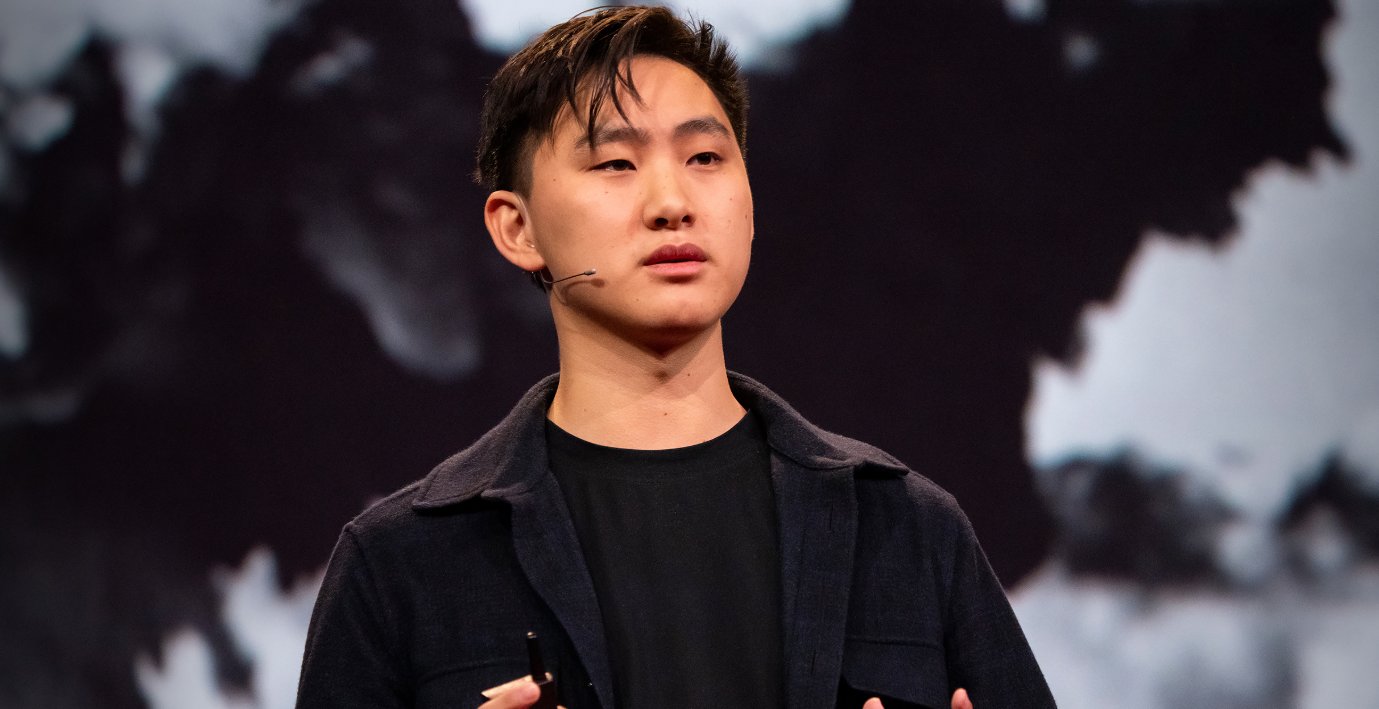
A lot of people started talking about AI once it became impossible to ignore. The headlines got louder, the funding got bigger, and suddenly every company wanted to sound like it had an AI story. But long before AI became the center of every tech conversation, Alexandr Wang was building around one of the parts most people were not paying attention to.
That is what makes his rise with Scale AI so interesting.
He did not build a consumer app that exploded overnight. He did not chase attention with a flashy product that looked good in demos but struggled in the real world. Instead, he went after a harder, less glamorous problem: how to make AI systems actually usable by giving them the high-quality data and operational support they need.
That bet turned out to be a sharp one. As the AI race accelerated, Scale AI moved from being a company many people outside the industry barely understood to becoming one of the most important names in the infrastructure layer behind modern AI. In the process, Wang went from a young founder with a strong technical profile to one of the most recognized entrepreneurs in the AI world.
Who Is Alexandr Wang?
Alexandr Wang is the co-founder of Scale AI, the company he launched in 2016 with Lucy Guo. He has often been described through the usual founder shorthand: young, brilliant, intense, ambitious. Some of that is true, but it does not really explain why his story matters.
What stands out more is how early he understood where the real value in AI would be created.
A lot of founders want to build the product everyone sees. Wang built around the layer that makes those products work better. That takes a different kind of instinct. It also takes patience, because infrastructure companies do not always look exciting to outsiders in the early days.
His rise was not only about being smart. Silicon Valley is full of smart people. It was about seeing that AI had a basic problem nobody could solve with hype alone. Models needed cleaner data, better labeling, stronger evaluation, and a reliable way to improve performance at scale. That problem was messy, operational, and difficult to package into a neat story. It was also a massive opportunity.
The Problem Most People Overlooked in AI
The AI world loves to celebrate the model. People talk about breakthroughs, capabilities, benchmarks, and what the latest system can do. But behind every strong model is a long chain of work that usually gets far less attention.
AI systems do not become useful because somebody simply decides they should. They become useful because the underlying data is prepared well, labeled properly, checked carefully, and improved over time. The better the data pipeline, the better the training process tends to be. The more reliable the evaluation, the easier it becomes to move from experiment to real deployment.
That is the gap Wang saw early.
Scale AI entered the market at a time when companies building machine learning systems had ambition, but many of them did not yet have the tools or processes needed to handle data at the level the technology demanded. The industry had talent and money, but it still had a bottleneck. High-quality AI depends on high-quality data work, and not many companies were built to solve that problem in a serious way.
What looked unglamorous to some people looked essential to Wang.
How Scale AI Turned That Gap Into a Business
Scale AI started by helping companies label and structure data for machine learning systems. That might sound narrow at first, but it was the kind of narrow problem that opened the door to something much bigger.
Once a company becomes useful in a core workflow, it gets a chance to grow with the market.
That is exactly what happened here. Scale AI did not stay limited to one corner of the machine learning process. As AI systems became more advanced, the company expanded into broader support around model evaluation, enterprise AI systems, and data operations that could serve much larger and more demanding customers.
This is one reason the company’s rise happened so quickly. Wang was not trying to build something trendy. He was building something foundational. That meant Scale AI could become relevant to AI labs, large businesses, and government work rather than depending on one narrow customer type.
That broader positioning matters. It is one thing to solve a startup pain point. It is another to become useful to major organizations that need AI to work in high-stakes environments. Scale AI managed to make that transition, and that is a big part of why the company became such an important name in the space.
Why Wang’s Timing Was So Important
Being early is not always a strength. Some founders are right about the future but too early for the market to care. Others arrive when the opportunity is obvious, but by then the competition is already intense.
Wang landed in a valuable middle ground.
He was early enough to build before the AI boom became overcrowded, but close enough to a major market shift that the company could grow right as demand surged. That timing gave Scale AI room to establish itself before the rest of the industry fully caught up to how critical data infrastructure would become.
This is where the story gets more interesting than the usual “young founder got rich” headline.
Wang’s bet was not simply that AI would grow. A lot of people believed that. His sharper bet was that as AI grew, the need for structured data work, better evaluation, and reliable operational systems would grow with it. In other words, he was not only betting on AI. He was betting on what AI would need once it moved from excitement to execution.
That is a much smarter position to build from.
The Turning Point That Made People Pay Attention
Every fast-rising company has a moment when outside attention catches up with what has already been happening internally. For Scale AI, that moment came through both market visibility and financial validation.
By then, the company was no longer just an interesting startup working on a niche technical problem. It had become a real infrastructure player in the broader AI economy. Its funding milestones made that impossible to ignore.
That shift changed how people viewed Wang as well.
He was no longer just a promising founder who had gotten an early start. He became the face of a company that had built itself into the AI stack at exactly the right time. The scale of the business, the valuation growth, and the company’s expanding relevance all pushed his profile much higher.
At that point, the story stopped being about whether Scale AI had found product-market fit. The bigger question became how far the company could go as AI spending accelerated and more organizations needed help making AI systems work in practice.
Building a Company That AI Leaders Could Not Ignore
One of the smartest things about Scale AI’s rise is that the company did not position itself like a side service. It kept moving closer to the center of the AI workflow.
That distinction matters.
Plenty of companies can win attention for a season. Far fewer become difficult for serious players to ignore. Scale AI did that by making itself relevant to the parts of the market where quality, speed, and reliability matter most.
As the company expanded, it became associated with more than annotation alone. It was increasingly tied to evaluation, deployment support, enterprise systems, and the larger operational work that helps AI move from prototype to production. That made Scale AI more durable than companies built around a single narrow service.
Wang deserves credit here because this kind of expansion does not happen by accident. It requires a founder who can see that the first product is not always the final identity of the business. The early wedge matters, but the long-term win often comes from knowing how to grow beyond it.
Scale AI did not just ride the AI wave. It found a way to become useful to the people building the wave.
What Made Alexandr Wang Different From Other Young Founders
A lot of founder stories get flattened into the same formula. Young person spots a trend, raises money, grows fast, and becomes the subject of glowing profiles. Wang’s story feels different because the core of it is not really about image.
It is about judgment.
He recognized that the flashy part of AI was not necessarily the most valuable place to build. He went after the bottleneck instead. That takes discipline, because bottlenecks are usually harder to explain and less exciting to market in the beginning.
He also moved with a level of urgency that helped Scale AI build real momentum before the rest of the market became saturated with AI companies. Speed alone is not enough, but speed plus clarity can be incredibly powerful. Wang seemed to understand both.
Another important part of his edge was execution. Plenty of founders can describe the future in a compelling way. Fewer can turn that vision into a business that serious customers depend on. Scale AI’s growth suggests Wang was able to do more than make a good prediction. He built systems, teams, and customer relevance around that prediction.
That is what separates a sharp founder from someone who simply happened to be in the right place at the right time.
Scale AI’s Growth Beyond the Original Pitch
One of the easiest ways to misunderstand Scale AI is to think of it only as a data-labeling company. That description may explain the starting point, but it does not capture the company’s broader role over time.
As the AI market matured, customer needs got more complex. They needed better data, yes, but they also needed stronger evaluation, higher confidence in outputs, and more complete systems that could fit into large organizations. Scale AI grew into that demand.
That broader evolution is a big reason the company kept gaining traction.
Businesses do not usually pay premium prices for a tool that solves a tiny isolated problem. They pay when a company helps them make important systems work better. Scale AI’s value increased as it moved closer to that position.
This is also part of why Wang’s early bet now looks so impressive. He did not build for a frozen version of the market. He built in a way that allowed the company to expand as the market changed. That kind of flexibility is a major strength in a fast-moving industry like artificial intelligence.
The Business Lessons Behind the Rise
There are several practical lessons in the Alexandr Wang and Scale AI story, and they go beyond AI.
The first is that the best opportunities are often hidden inside boring or difficult problems. Everybody wants to build the thing that gets attention. Fewer people want to build the thing the flashy product depends on. Yet that is often where durable value lives.
The second lesson is that timing matters, but timing is not just about being early. It is about being early in a way that still connects to real demand. Wang did not just guess that AI would matter. He identified the part of AI that would become more valuable as adoption expanded.
The third lesson is that infrastructure can be a stronger long-term play than hype. Trends move fast. Hype cycles fade. But when a company becomes embedded in the actual work of an industry, it gives itself a much better chance to last.
The fourth lesson is that execution changes everything. A good market insight means very little if a company cannot turn it into customer trust, product relevance, and scalable growth. Scale AI’s rise was not just a reflection of market excitement around AI. It was also a reflection of disciplined execution.
Why the Alexandr Wang and Scale AI Story Still Stands Out
There is no shortage of AI founders now. Every week seems to bring a new announcement, a new funding round, or a new claim about changing the future. That makes it harder for any individual founder story to feel distinct.
Even so, the Alexandr Wang and Scale AI story still stands out.
Part of that is because the company grew around a real and lasting need rather than a temporary narrative. Part of it is because Wang was early in a way that proved useful, not just interesting. And part of it is because Scale AI became meaningful to the people and organizations doing serious work in the field.
His rise was fast, but it was not random.
It came from understanding that AI would need more than smarter models and bigger headlines. It would need better data, stronger evaluation, and systems that could hold up when the stakes got real. Wang built where those needs were heading, and that is why his success with Scale AI still feels more substantial than most founder stories built around momentum alone.
Entities Related to Alexandr Wang and Scale AI
Alexandr Wang, Scale AI, Lucy Guo, artificial intelligence, machine learning, training data, data labeling, model evaluation, enterprise AI, AI infrastructure, generative AI, Y Combinator, San Francisco, MIT, AI systems, frontier models, data foundry, automation, enterprise software, government AI, defense technology, AI adoption, model training, human-in-the-loop workflows.
Semantically Related Words
AI startup, founder journey, billion-dollar startup, AI growth, startup success, machine learning infrastructure, data operations, model performance, rapid scale, enterprise adoption, AI ecosystem, early mover advantage, operational backbone, technical execution, data pipeline, scalable systems, infrastructure layer, growth story, valuation growth, AI expansion.
Contextually and NLP Related Words
Alexandr Wang success story, Scale AI growth story, Scale AI founder, young tech founder, AI infrastructure company, data labeling platform, AI model evaluation, machine learning data pipeline, enterprise AI solutions, AI deployment, startup execution, AI market timing, scalable AI systems, trusted AI infrastructure, modern AI stack, frontier AI models, company valuation, startup momentum, operational AI, AI business strategy.