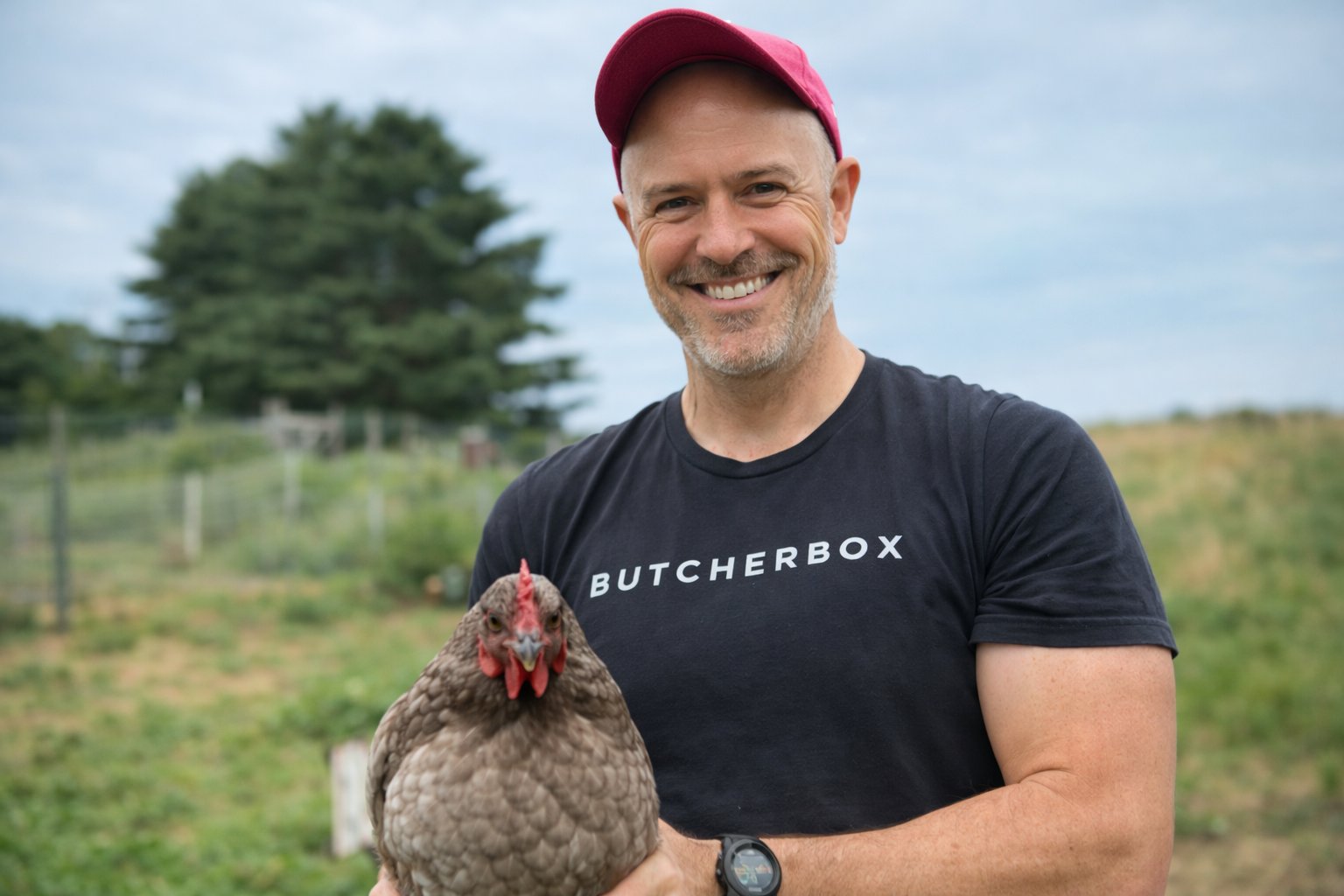
When people talk about fast-growing consumer brands, the story often sounds familiar. A founder spots a market gap, raises a pile of venture capital, burns through it to scale quickly, and hopes the business model catches up later. Mike Salguero took a different route with ButcherBox.
He built the company around a simple but powerful idea: people wanted better meat, but buying it consistently was harder than it should have been. Instead of chasing the usual startup playbook, he focused on solving a real household problem, building trust with customers, and growing the business with discipline. That approach helped ButcherBox become one of the most talked-about names in direct-to-consumer food.
What makes this story interesting is not just the size of the business. It is the way it grew. Mike Salguero did not build ButcherBox as a flashy trend-driven brand. He built it as a practical answer to a real need, then turned that answer into a national subscription business with strong brand loyalty, a clear mission, and a model that proved bootstrapped companies can still win big.
Mike Salguero’s path before ButcherBox
Before ButcherBox became a known name in food ecommerce, Mike Salguero was already learning hard lessons about entrepreneurship. He had startup experience before launching the company, and that background mattered. It gave him a more grounded view of risk, growth, and what it really takes to build something that lasts.
That earlier experience seems to have shaped the way he approached ButcherBox from the start. Rather than treating the business like a quick-growth experiment, he treated it like something that needed a strong foundation. That meant understanding margins, respecting operations, and staying focused on what customers actually cared about.
A lot of founders talk about disruption first and business fundamentals second. Mike Salguero appears to have flipped that order. The result was a company that felt more intentional from the beginning.
The personal problem that sparked the ButcherBox idea
The idea for ButcherBox did not come out of a trend report or an investor pitch deck. It came from real life. Mike Salguero has spoken about how the search for better meat became personal when he and his wife were trying to make healthier food choices. Finding grass-fed beef in a consistent, convenient way was not easy, especially if you wanted more than one or two basic options from a local grocery store.
That frustration became the spark.
Instead of accepting that the market was just inconvenient, he started looking for a better solution. Buying meat in bulk directly from a butcher helped, but it also showed how awkward the process could be for an average household. At some point, the bigger opportunity became obvious. If his family had this problem, a lot of other families probably did too.
That is one of the reasons the ButcherBox story works so well. The company was not created to force demand. It was created to meet a need that already existed.
Why Mike Salguero saw an opportunity in the meat industry
The meat category was not exactly empty when ButcherBox launched. Grocery stores were everywhere. Traditional butchers already existed. Big legacy brands had established supply chains. On paper, it might not have looked like an obvious startup opportunity.
But Mike Salguero saw something that established players were not really solving. Many consumers wanted meat that felt better in every sense of the word. They wanted quality. They wanted consistency. They wanted more transparency around sourcing. They wanted the process to feel easier.
That created a lane for ButcherBox.
The company positioned itself around premium protein, convenient home delivery, and clearer sourcing standards. It was not only selling meat. It was selling trust, simplicity, and peace of mind. For busy households, that was a strong value proposition.
This is where the business model became smart. Instead of trying to outmuscle bigger players on price or store presence, ButcherBox focused on a customer group that cared deeply about quality and was open to a subscription model that removed friction.
How ButcherBox launched with a bootstrapped mindset
One of the most important parts of this story is how ButcherBox got off the ground. The company started with a Kickstarter campaign, which helped validate the idea early and bring in customers before the business was fully built at scale. That was a practical move. It brought in momentum, generated preorders, and proved there was real demand.
More importantly, it fit the broader mindset behind the company. Mike Salguero did not build ButcherBox around the assumption that outside investors would fund every next step. He built it with a bootstrapped mentality.
That choice shaped the company in ways that likely mattered far beyond finance. Bootstrapped businesses tend to make different decisions. They are usually more careful about customer acquisition. They think harder about retention. They are less likely to waste money chasing vanity metrics. They have to earn growth.
For ButcherBox, that discipline became part of the success story. Instead of inflating the business with hype, the company grew by proving that customers liked the product enough to keep buying it.
Solving the hardest part of the business
Starting a subscription company is one thing. Starting a subscription company that ships frozen meat across the country is something else entirely.
This was one of the hardest parts of building ButcherBox. The business was not just about branding or digital marketing. It was deeply operational. Packaging mattered. Fulfillment mattered. Temperature control mattered. Timing mattered. One bad experience could break customer trust very quickly.
That is why execution became such a central part of the company’s rise.
Mike Salguero has shared that he had to learn quickly and seek out people with operational knowledge, including experienced voices who understood the logistics side of food distribution. That willingness to learn seems to have been a major strength. He did not pretend to know everything. He looked for expertise, built systems, and kept improving the model.
Many businesses fail because the founder has a decent idea but cannot handle the hard middle part where the idea has to become reliable at scale. ButcherBox had to solve that part early, and solving it well gave the brand credibility.
What made ButcherBox different from other food brands
A lot of direct-to-consumer brands can copy surface-level tactics. They can build a clean website, run social ads, and talk about convenience. What is much harder to copy is the deeper combination of product quality, sourcing standards, and brand trust.
That is where ButcherBox stood out.
The brand leaned heavily into high-quality meat and seafood, with an emphasis on standards that mattered to its audience. Over time, ButcherBox built a stronger identity around humanely raised meat, third-party certifications, and a broader effort to rethink parts of the food system instead of just delivering boxes.
This gave the company more substance than a typical subscription brand. Customers were not only paying for frozen products to show up at the door. They were buying into a brand promise about quality, sourcing, and responsibility.
That kind of positioning matters in food. People are much more likely to stay loyal when they believe a company is serious about what it sells.
How Mike Salguero grew ButcherBox without outside investors
One of the most unusual things about ButcherBox is how far it went without raising outside capital in the way many modern startups do. That point comes up often when people talk about Mike Salguero because it says a lot about the company’s operating style.
Growing without external investors forces a business to pay attention to the fundamentals. Revenue matters more. Margins matter more. Customer retention matters more. The business cannot afford to drift too far away from what actually works.
That pressure can be difficult, but it can also be healthy.
For ButcherBox, independence seems to have brought clarity. The company could focus on building a real brand with long-term value rather than chasing whatever looked impressive in the short term. It also allowed Mike Salguero and his team to preserve more control over the company’s direction.
In a startup world that often celebrates fundraising as if it were the same thing as success, the ButcherBox story feels refreshing. It reminds people that a business does not need to follow the loudest path to become a major player.
The role of brand trust in ButcherBox’s success
Trust is one of the most valuable assets a food company can build, and ButcherBox understood that early.
Customers want to feel confident in what they are feeding themselves and their families. That confidence does not come from marketing language alone. It comes from consistent product quality, dependable delivery, clear communication, and a brand identity that feels credible.
ButcherBox built that trust over time through its subscription model and its focus on standards. When a customer has a good experience once, they may come back. When they have a good experience again and again, the brand becomes part of their routine.
That is a huge advantage in ecommerce.
The company also benefited from the fact that its offer fit naturally into real life. People do not need a one-time novelty product. They need dinner. They need reliable ingredients. They need convenience without feeling like they are giving up quality. ButcherBox turned those everyday needs into recurring revenue by making the experience feel dependable.
How ButcherBox turned growth into a mission-driven business
Another reason Mike Salguero and ButcherBox stand out is that the company did not stop at growth. It pushed its identity further into mission-driven territory.
That shows up clearly in the brand’s emphasis on animal welfare, environmental responsibility, and accountability across the supply chain. Becoming a Certified B Corporation added another layer to that story. It signaled that ButcherBox wanted to be measured against broader standards, not just sales performance.
This matters because mission can easily turn into vague branding language if it is not backed by action. In the case of ButcherBox, the company tied its message to sourcing practices, third-party verification, and a visible effort to talk about impact in a more concrete way.
That helped the business build more depth. Customers increasingly want to know what a brand stands for, especially in categories tied to health, sustainability, and everyday consumption. ButcherBox gave people a clearer answer than many competitors.
Key milestones that showed ButcherBox was built to last
There are a few moments in the ButcherBox timeline that make it clear this was not just an interesting startup idea. It became a real, durable business.
The early Kickstarter launch gave the company proof of demand. The steady growth that followed showed that customers were sticking around. Revenue climbed rapidly over the years, which is especially notable given the company’s bootstrapped path.
Then came the broader signs of maturity. ButcherBox earned B Corp certification and later recertification, expanded its product story, and kept building around sourcing and operational trust. The company has also marked major milestones such as delivering more than a billion meals, which speaks to both scale and staying power.
More recently, the business has shown that it can evolve beyond its original subscription identity. Expansion into new channels and adjacent moves suggests that Mike Salguero was not just building a box delivery business. He was building a brand with room to grow.
Leadership lessons from Mike Salguero and ButcherBox
There are a lot of useful lessons in the rise of Mike Salguero and ButcherBox, especially for founders who feel pressured to imitate whatever is fashionable.
The first lesson is that real businesses often start with real problems. ButcherBox was compelling because the need behind it was obvious and relatable.
The second lesson is that constraints can be useful. Because the company was built with a bootstrapped mindset, it had to stay close to the customer and make disciplined decisions. That likely made the business stronger.
The third lesson is that operations matter just as much as branding. It is easy to talk about storytelling, but if the product experience falls apart, the story does not hold. ButcherBox succeeded in part because it got the hard operational details right.
The fourth lesson is that mission works best when it is tied to execution. Mike Salguero did not seem to treat values as decoration. He built them into sourcing, standards, and the way the company positioned itself.
And finally, the ButcherBox story shows that independent growth can still create a category-defining business. You do not need to follow the loudest model to build something meaningful. Sometimes the smartest path is the one that stays practical, customer-focused, and steady from the very beginning.