Most AI tools are still built around one person doing one task faster. They can draft an email, summarize a document, search through notes, or help someone plan their day. That is useful, but it does not solve one of the biggest problems inside modern companies: people still struggle to stay aligned.
This is where Addi Haran Diman and Alike enter the conversation. Instead of treating AI as a private assistant for individual productivity, Alike is looking at a bigger workplace challenge. How do teams share context? How do people and AI agents coordinate without creating more noise? How can technology make collaboration feel more human instead of more fragmented?
Addi Haran Diman’s work stands out because it sits at the meeting point of social science, artificial intelligence, workplace cohesion, and team collaboration. Her path from Oxford research to AI entrepreneurship gives Alike a different kind of foundation. The company is not only asking what AI can do. It is asking how AI can understand the way people work together.
Who is Addi Haran Diman
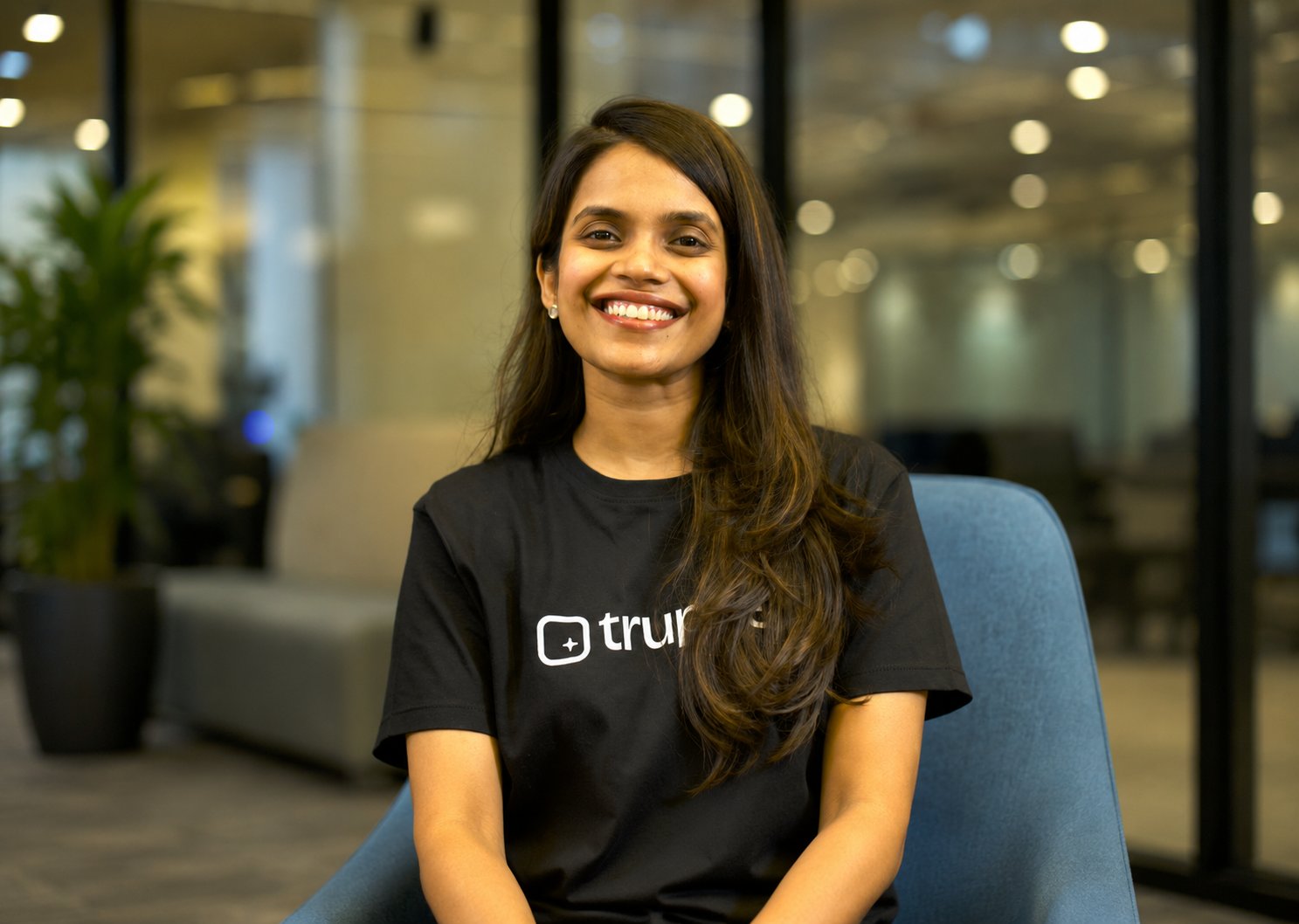
Addi Haran Diman is the founder and CEO of Alike, an AI startup focused on multiplayer AI and social intelligence for the future of work. Her background includes research at the University of Oxford, where her work has been connected to politics, social data science, group behavior, conflict processes, and coordination.
That background matters because Alike is not being built around a shallow reading of workplace productivity. It is built around a deeper question: why do groups fail to coordinate even when everyone is trying to do good work?
In many companies, the problem is not a lack of talent. It is a lack of shared understanding. People work across Slack, email, docs, meetings, project boards, and AI tools, but context gets scattered. One person knows why a decision was made. Another person only sees the final task. A manager assumes everyone is aligned. A teammate quietly works from outdated information.
Addi’s research-led view gives her a useful lens for this problem. Teams are social systems. Work is not just a list of tasks. It is a network of decisions, relationships, expectations, dependencies, and trust.
A founder shaped by social systems
Many AI founders start from the model side of the problem. They ask how to make software more powerful, faster, or more autonomous. Addi Haran Diman appears to approach the space from another direction. She looks at the human system first.
That is an important distinction. In the workplace, a tool can be technically impressive and still fail if it does not fit the social reality of how teams operate. People do not only need answers. They need timing, context, tone, accountability, and a clear sense of what others are doing.
This is why social intelligence is such a central idea in the Alike story. In simple terms, social intelligence in AI means building systems that understand more than text or tasks. They need to understand roles, relationships, shared goals, group behavior, and the hidden coordination work that usually falls between meetings and messages.
For Addi, this kind of thinking naturally connects academic research with startup building. Her work around group behavior and coordination gives Alike a sharper point of view in a crowded AI market.
What is Alike
Alike is an AI startup building technology for better coordination between people, teams, and AI agents. The company’s focus is often described through ideas like multiplayer AI, agent-to-agent communication, workplace cohesion, and social intelligence.
A simple way to understand Alike is this: it is trying to make AI useful at the team level, not only the individual level.
Most teams already have too many tools. They have chat apps, calendar tools, knowledge bases, ticketing systems, project dashboards, meeting transcripts, task managers, and now AI assistants on top of everything else. In theory, all of this should make work easier. In practice, it often creates more places where information can get lost.
Alike is focused on the gap between activity and alignment. Teams can be busy all day and still not move together. They can send hundreds of messages and still misunderstand what matters. They can use advanced AI tools and still rely on humans to manually connect the dots.
That is the workplace pain Alike is trying to address.
The problem Alike is trying to solve
Modern work has a coordination problem. People spend a large part of their day not doing the actual work, but managing the work around the work. They check updates, repeat context, chase decisions, explain the same thing twice, and sit through meetings because no one is fully sure who knows what.
This problem becomes even harder in remote and hybrid teams. When people are not in the same room, shared context has to be built intentionally. A quick hallway conversation becomes a message thread. A small misunderstanding becomes a delay. A missing decision becomes a meeting.
AI can help, but only if it reduces friction instead of adding another layer of noise. If every person has a separate AI assistant that only understands their own private context, the team can become even more fragmented. Everyone may move faster individually while the group becomes less coordinated.
Alike’s approach points to a different future. It imagines AI that can help maintain shared context, support team alignment, and reduce unnecessary communication without removing the human side of collaboration.
What multiplayer AI means in the Alike story
Multiplayer AI is one of the most useful ways to explain Alike’s direction. It means AI built for shared work, not just personal productivity.
A solo AI assistant helps one person. It can write, summarize, plan, brainstorm, or search. A multiplayer AI system has a bigger job. It needs to support a group of people who have different roles, different information, and different responsibilities, but who still need to move toward a shared outcome.
In a company setting, that means understanding more than a prompt. It means understanding the project, the people involved, the history of decisions, the dependencies between teams, and the real reason something matters now.
This is why Alike’s work around agent-to-agent communication is important. As workplaces adopt more AI agents, those agents will need to communicate with each other. They will need to coordinate tasks, share relevant context, and avoid creating extra work for humans.
The real promise is not a workplace where AI replaces teamwork. The better promise is a workplace where AI handles more of the coordination burden, so people can focus on judgment, creativity, strategy, and relationships.
From solo assistants to team-level intelligence
The first wave of workplace AI made individual tasks easier. People used AI to write faster, summarize faster, research faster, and automate small pieces of their workflow. The next wave is likely to focus on team-level intelligence.
That shift matters because companies do not succeed through individual output alone. They succeed when people coordinate well. A great product launch, for example, depends on engineering, design, marketing, sales, customer support, legal, and leadership moving together. If one team has context that another team lacks, the whole project slows down.
Alike’s opportunity is in helping teams build and maintain a clearer shared picture. That could mean less duplicated work, fewer unnecessary check-ins, better handoffs, and a stronger sense of what needs attention.
This is where Addi Haran Diman’s research background becomes especially relevant. Team intelligence is not only a technical challenge. It is a social challenge. It requires understanding how groups form meaning, how trust is built, how misalignment happens, and how people respond to information.
The social intelligence behind Alike
The phrase social intelligence can sound abstract, but inside the workplace it is very practical.
A socially intelligent system should know that a message from a founder may carry different weight than a message from a peer. It should know that a delayed response could mean overload, not disinterest. It should understand that a team does not always need more information. Sometimes it needs clearer priorities.
This kind of AI is harder to build than a simple chatbot because it has to work with context. It has to understand human behavior, group dynamics, and the messy way work actually happens.
For Alike, social intelligence is not just a branding phrase. It is part of the company’s core idea. AI should not only produce content. It should help people and agents work together with less confusion.
That makes Alike part of a larger movement toward human-centered AI, collaborative intelligence, and agentic computer-supported cooperative work. These are not just technical trends. They reflect a real shift in how companies think about productivity.
Shared context as the missing layer
Many workplace problems come from missing context. A decision is made in one meeting but not captured clearly. A team changes direction, but another team keeps working from the old plan. A customer request gets discussed in Slack, but the product team never sees the full reasoning.
Shared context is the layer that makes collaboration smoother. Without it, people spend too much time asking basic questions. What changed? Who owns this? Why are we doing it this way? What did we decide last week? Is this still the priority?
Alike’s vision fits this gap. A system built around shared context could help teams stay aligned without forcing everyone to attend every meeting or read every thread. It could help surface what matters, connect related information, and support better coordination across tools.
This is especially valuable as companies bring more AI agents into their workflows. If those agents do not share context, they may become just another source of fragmentation. If they do share context well, they can become part of a more intelligent collaboration system.
How Addi Haran Diman’s leadership shaped Alike
Addi Haran Diman’s leadership is central to Alike’s story because the company’s product direction reflects her background. She brings together research, social behavior, AI, and a clear understanding of how coordination breaks down.
That mix gives her an advantage. In a crowded AI startup market, it is easy to build something that looks impressive in a demo but does not solve a deep workplace problem. Alike’s positioning is stronger because it starts with a real human pain point.
The company is also shaped by a team with complementary strengths. Addi works alongside people with experience across AI, computer science, product thinking, and commercial strategy. Together, they are building around a difficult but valuable idea: AI should help teams coordinate better, not simply help individuals produce more output.
That is a more ambitious product vision than building another workplace assistant. It requires deep thinking about how people communicate, how decisions move through organizations, and how AI can support work without overwhelming people.
Building with a research-led mindset
One of the most interesting parts of Addi Haran Diman’s success is that she shows how research can become a product advantage.
In AI, many companies compete on speed. They want to launch quickly, automate quickly, and capture attention quickly. Speed matters, but it is not enough. The products that last usually understand the problem deeply.
Addi’s research-led mindset gives Alike a clear foundation. Instead of chasing every AI trend, the company can focus on a specific problem: coordination failure. That focus helps the product feel more grounded.
A research-led approach also encourages better questions. What causes teams to lose shared meaning? How do people know when they are aligned? What kind of information should an AI agent share with another agent? When should AI stay quiet instead of sending another notification?
These are the questions that matter if AI is going to become part of daily work in a serious way.
Alike’s early momentum
Alike has already started gaining attention in the startup ecosystem. The company has been connected with Oxford’s entrepreneurial community and has received recognition for its work around workplace cohesion and AI-powered collaboration.
Alike’s presence in a16z Speedrun is another strong signal. The program, connected to Andreessen Horowitz, is designed for early-stage startups building ambitious technology companies. For a startup like Alike, that kind of environment can bring product feedback, investor attention, and access to other founders working on the edge of AI.
Early interest from companies, design partners, and teams suggests that Alike is not solving a niche problem. Workplace coordination is a daily frustration for startups, scaleups, and larger organizations. As teams adopt more AI tools, the need for coordination infrastructure will only become more visible.
Winning attention in the AI startup ecosystem
The reason Alike’s early momentum matters is simple. The AI market is crowded, and attention is difficult to earn. A startup has to show more than a smart concept. It has to show that the problem is real, urgent, and worth solving.
Alike’s focus on multiplayer AI gives it a clear place in the market. It is not only trying to automate tasks. It is trying to improve how teams and agents work together.
That difference is important for buyers too. Companies are already asking what AI should do beyond writing emails and summarizing documents. They want systems that help teams make better decisions, move faster, and reduce internal confusion.
This is the larger market Alike is entering.
Why Alike fits the future of work
The future of work is not only about remote work, hybrid schedules, or more software. It is about how people coordinate in increasingly complex environments.
Teams are distributed across cities, time zones, tools, and communication channels. AI is becoming part of that environment, but most organizations are still figuring out how to use it well. The next challenge is not simply adding AI everywhere. The real challenge is making AI fit into the way teams already work.
Alike fits this future because it focuses on alignment. It asks how AI can reduce the hidden costs of coordination. It looks at how people and agents can share context, understand priorities, and work toward common goals without creating more chaos.
That is a practical and timely problem. As companies become more AI-native, they will need systems that help humans and machines cooperate more smoothly.
Less noise and more clarity
One of the best promises of socially intelligent AI is that it can reduce noise.
Workplace technology has often made communication easier but not always better. When it becomes effortless to send a message, people send more messages. When every tool creates notifications, attention becomes scattered. When every meeting gets summarized, teams still need to know which parts matter.
Alike’s direction suggests a calmer version of workplace AI. The goal is not to flood people with more outputs. The goal is to help the right information reach the right person or agent at the right time.
That is the difference between automation and useful coordination. Automation does something faster. Coordination helps the whole team move better.
Better coordination across remote and hybrid teams
Remote and hybrid work made coordination harder because teams lost many informal signals. People no longer always see who is busy, who is confused, or who needs help. A lot of that awareness has to be recreated through tools.
This is where AI can be valuable, but only if it is designed carefully. A helpful system should not make people feel watched or overloaded. It should make work feel easier to follow.
For remote teams, Alike’s ideas around shared context and agent communication could be especially useful. A team spread across time zones needs more than a record of messages. It needs a living understanding of what is happening, what changed, and what needs attention.
That is why the idea of AI-powered social copilots feels relevant. The best workplace AI will not only help people type faster. It will help teams stay connected to the meaning behind the work.
AI that understands people, not only tasks
The most interesting part of Alike is its human angle. The company is building in a field where many products talk about automation, speed, and efficiency. Those things matter, but they are not the whole story.
Work is still deeply human. People need trust, clarity, recognition, and a sense of shared purpose. A tool that ignores those things may improve one metric while making the workplace feel worse.
Addi Haran Diman’s approach suggests a different view. AI should understand the social side of work. It should support better communication, clearer handoffs, and stronger alignment. It should make people feel less buried by coordination work, not more dependent on constant updates.
That is what makes Alike’s story worth watching.
What founders can learn from Addi Haran Diman and Alike
Addi Haran Diman’s path offers a few useful lessons for other founders.
The first lesson is to build from a real problem. Alike is not based on a vague claim that AI will change everything. It is based on something people already feel every day: modern teams are overloaded with communication and still often misaligned.
The second lesson is to use deep expertise as an advantage. Addi’s background in social data science, politics, group behavior, and coordination gives Alike a stronger product narrative. It helps the company explain why its problem matters and why the solution requires more than basic automation.
The third lesson is to make AI feel useful instead of overwhelming. As more companies adopt AI, users will become more selective. They will not want tools that add another dashboard, another inbox, or another stream of notifications. They will want tools that make work lighter.
Alike’s success will depend on how well it turns a complex idea into a simple user experience. That is the hard part of building in AI. The technology may be advanced, but the value has to feel obvious.
The bigger story behind Addi Haran Diman’s success
Addi Haran Diman’s story points to a broader shift in AI entrepreneurship. The next generation of AI companies will not only come from technical breakthroughs. Some will come from founders who understand people, organizations, behavior, and social systems.
That is why Alike feels different from many workplace AI tools. It is not only trying to help someone finish a task faster. It is trying to improve the way teams coordinate around shared work.
In a world where AI agents are becoming more common, that focus matters. Companies will need more than powerful models. They will need shared context, social intelligence, and better ways for humans and AI systems to work together.
For Addi Haran Diman and Alike, the opportunity is clear. If AI is going to reshape the future of work, it should not only make work faster. It should make collaboration clearer, more connected, and more human.