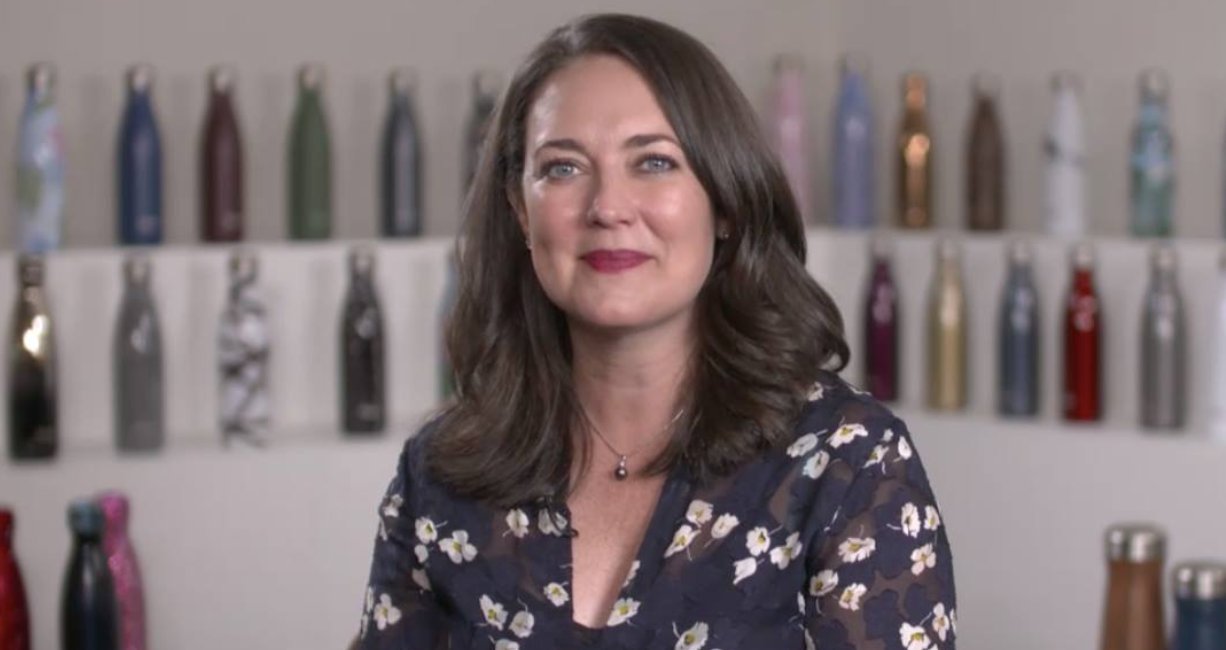
Water bottles were not always something people thought about twice. For a long time, they sat in the background as purely practical items: useful, forgettable, and rarely something anyone would describe as stylish. Sarah Kauss saw that differently. She believed an everyday product could do more than serve a basic need. It could look polished, feel elevated, and fit naturally into the way people wanted to live.
That idea became S’well.
What made the brand stand out was not that it invented the reusable bottle category from scratch. Reusable bottles already existed. What Sarah Kauss noticed was that most of them leaned too heavily on utility and left very little room for design, identity, or emotion. She saw space for a product that could sit at the intersection of sustainability, fashion, and consumer desire.
That shift in thinking changed everything. S’well was no longer just selling a bottle. It was selling a better-looking habit, a cleaner daily routine, and a product people actually wanted to carry around. That is a big reason Sarah Kauss and S’well became such a strong example of how smart branding can transform a simple object into a premium lifestyle brand.
Sarah Kauss did not start in the product world
One reason Sarah Kauss brought a different perspective to S’well is that she did not come from the typical founder path people expect in consumer products. She was not introduced as a trendy startup personality or a product designer chasing the next viral idea. Her background was more grounded, more structured, and in some ways more practical.
That matters because it shaped how she built the company.
Rather than treating the brand like a short-term opportunity, she approached it with discipline. She understood numbers. She understood how businesses grow. She understood that a strong idea only becomes real when it is backed by execution, consistency, and patience. Those qualities helped her make decisions that protected the long-term value of the brand.
This is part of what makes her story interesting. Sarah Kauss did not stumble into success because she found a lucky product trend. She recognized a market gap, trusted her instinct about consumer behavior, and built around that insight with unusual clarity.
The idea behind S’well came from a simple gap in the market
The product idea behind S’well was not complicated, and that is exactly why it worked.
Sarah Kauss noticed that reusable bottles already had a clear purpose, but most of them were designed like purely functional gear. They did the job, but they did not feel refined. They were useful without being desirable. In almost every other area of consumer life, people were willing to pay for products that looked better, felt better, and reflected their taste. Bottles had somehow escaped that shift.
She saw an opening.
If people carry a bottle into offices, gyms, airports, meetings, and daily routines, then that bottle becomes part of what they present to the world. It is visible. It travels with them. It sits on desks and tables. Once you see it that way, it makes perfect sense that design would matter.
That was the real insight behind S’well. The opportunity was not simply to make another reusable bottle. It was to create one people would be proud to own.
Why S’well felt different from other reusable bottles
S’well stood out because it looked intentional from the start. The shape was sleek. The finishes felt polished. The product looked less like outdoor equipment and more like something that belonged in a premium retail environment.
That difference may sound small, but in consumer branding, small differences often carry the whole business.
Plenty of products succeed because they solve a problem. The stronger brands tend to do one extra thing: they make people feel something while solving it. S’well made hydration feel more elegant. It made a reusable bottle feel giftable. It gave a practical object a sense of taste.
That is how an everyday item begins to move into lifestyle territory.
Instead of competing only on function, S’well competed on perception. It positioned itself in a way that made the product feel more personal. Buyers were not just choosing a bottle to hold water. They were choosing a bottle that matched their style, their desk, their bag, their routine, and in many cases their self-image.
Sarah Kauss built the brand around style first, mission second
One of the smartest parts of the Sarah Kauss and S’well story is that the company did not win because it pushed a worthy mission louder than everyone else. The mission mattered, but the brand’s growth depended on something more practical: making the product appealing enough for people to want it before they felt they needed to support it.
That distinction is important.
A lot of mission-driven brands make the mistake of assuming consumers will buy primarily because the cause is good. In reality, most people still respond first to desire, convenience, quality, and identity. Sarah Kauss understood that S’well needed to attract people through beauty and product appeal, not only through environmental messaging.
That did not weaken the mission. It strengthened the business.
By leading with design, S’well reached consumers who may not have been actively searching for a sustainability-focused product. They were drawn in by the look, the feel, and the premium presence. Once they were in, the environmental benefit became an extra reason to stay loyal.
This is one of the clearest lessons in the brand’s rise. Mission can open the emotional layer of a company, but product appeal is what gets most people to pay attention in the first place.
How S’well turned an everyday product into a premium purchase
Turning a simple bottle into a premium product is not just about making it expensive. It is about giving people a reason to believe the higher price makes sense.
S’well did that by changing the category story.
Instead of framing the bottle as a low-cost replacement for disposable plastic, the brand presented it as part of a polished modern lifestyle. The bottle felt elevated enough to become a personal item rather than a generic accessory. That shift made people more open to spending more.
Premium consumer brands usually rely on a few core ingredients. They create strong visual recognition. They make the product feel emotionally satisfying. They build consistency across packaging, retail presence, and communication. Most of all, they avoid looking cheap, rushed, or interchangeable.
S’well checked those boxes.
It also entered spaces where premium positioning felt natural. It worked as a personal purchase, but it also worked as a gift. That matters more than it may seem. Once a product becomes giftable, it gains a different kind of status. It is no longer just practical. It becomes something people are proud to give and happy to receive.
The branding choices that helped S’well scale
S’well’s growth was not powered by one lucky moment. It was built through repeated branding decisions that made the company look consistent, polished, and memorable.
The visual language of the brand played a major role. The products looked clean and modern. The finishes felt considered. The overall presentation made S’well feel like a lifestyle brand rather than a commodity.
That consistency matters because premium brands do not usually win by shouting the loudest. They win by controlling the feeling around the product. Every detail either supports the perception of value or weakens it.
Sarah Kauss and her team understood that. They did not treat design as decoration. They treated it as business strategy.
Seasonal patterns, colorways, and collaborations helped keep the line fresh without losing brand recognition. The result was a product range that felt collectible while still staying identifiable. Consumers could recognize the world of S’well even when the designs changed.
That kind of repeatable brand identity is a major reason simple products grow into powerful consumer businesses.
Retail expansion gave S’well cultural momentum
A premium brand becomes much stronger when people start seeing it everywhere in the right places.
Retail did that for S’well.
Strong distribution helped the brand move from interesting product to familiar name. Once S’well entered major retail channels, it became easier for more consumers to discover it, understand its value quickly, and connect the brand with a certain kind of modern lifestyle.
Visibility creates legitimacy. When shoppers repeatedly see the same brand in respected retail environments, it starts to feel established. That is especially important for products in crowded categories.
S’well benefited from that effect. Instead of remaining a niche reusable bottle, it moved closer to mainstream recognition. That gave the brand cultural momentum and widened the audience well beyond early adopters.
It also reinforced the premium story. Placement matters. A product displayed in the right environment can instantly feel more desirable. S’well was not just on a shelf. It was being framed as part of an aspirational consumer experience.
S’well proved sustainability could be stylish
For years, many eco-friendly products carried an image problem. They asked consumers to make a responsible choice, but often offered a weaker aesthetic experience in return. The message was worthy, yet the product itself could feel plain, overly earnest, or designed only for people already committed to the cause.
S’well helped change that.
By making the bottle attractive enough to stand on its own, Sarah Kauss made sustainability easier for mainstream consumers to adopt. People did not have to choose between looking polished and making a better environmental decision. They could do both at once.
That is a bigger shift than it sounds.
When a product removes friction between values and desire, it opens the market. Consumers are far more likely to build a new habit when the product fits naturally into the life they already want. S’well did not try to shame people into change. It made the alternative feel better.
That approach helped move reusable drinkware closer to the cultural center. It turned sustainability into something more approachable, visible, and everyday.
What made Sarah Kauss different as a founder
A lot of founders talk about vision. Fewer are able to protect it when growth starts putting pressure on the business.
Sarah Kauss stands out because she seemed to understand early that premium positioning can be fragile. Once a brand loses its clarity, it becomes much easier for it to drift into sameness. Protecting the original point of view matters.
That appears to have been one of her strengths.
She built S’well with a strong sense of what it was supposed to be. Not just functional. Not just mission-driven. Not just trendy. It had to feel elevated, recognizable, and desirable in a way that most competitors did not.
She also represents a different kind of founder success story. S’well was not celebrated because it followed the loudest startup script. It was celebrated because it built a real business around thoughtful positioning, consumer insight, and disciplined growth.
That is what makes her story resonate with other entrepreneurs. It shows that you do not always need a complicated product or a flashy narrative. Sometimes the real edge comes from seeing a familiar category more clearly than everyone else.
The business results that validated the idea
Branding stories are interesting, but they become much more compelling when the market validates them.
That happened with S’well.
The company grew from a self-funded concept into a major consumer brand, proving that premiumization in a basic category was not just a clever theory. People were willing to buy in. Retailers were willing to carry it. The market was large enough to support real scale.
That commercial validation matters because many products get attention without building durable business value. S’well showed that design-led positioning, when matched with execution, could support strong growth over time.
It also showed that a simple object can become category-defining when the brand behind it is clear enough. Sarah Kauss did not need to reinvent hydration. She needed to reframe how consumers thought about the bottle itself.
That reframing created a stronger business than many people would have expected from such an ordinary product category.
What other founders can learn from Sarah Kauss and S’well
The Sarah Kauss and S’well story carries a lesson that applies far beyond drinkware.
First, overlooked categories can hold major opportunity. In fact, they often do. When a market is crowded with products that all look and feel the same, even a subtle shift in positioning can create space for a breakout brand.
Second, premium branding is not limited to luxury categories. A founder can create premium value in an ordinary market if the product experience, design language, and emotional appeal all work together.
Third, mission becomes more powerful when the product is already desirable. Consumers may admire purpose, but they usually buy what fits their life, taste, and identity. S’well succeeded because it connected those two forces instead of choosing one over the other.
And finally, simple products should never be underestimated. Sometimes the biggest opportunities are hiding inside objects people think are too basic to matter. Sarah Kauss proved that a plain category does not have to lead to a plain business.