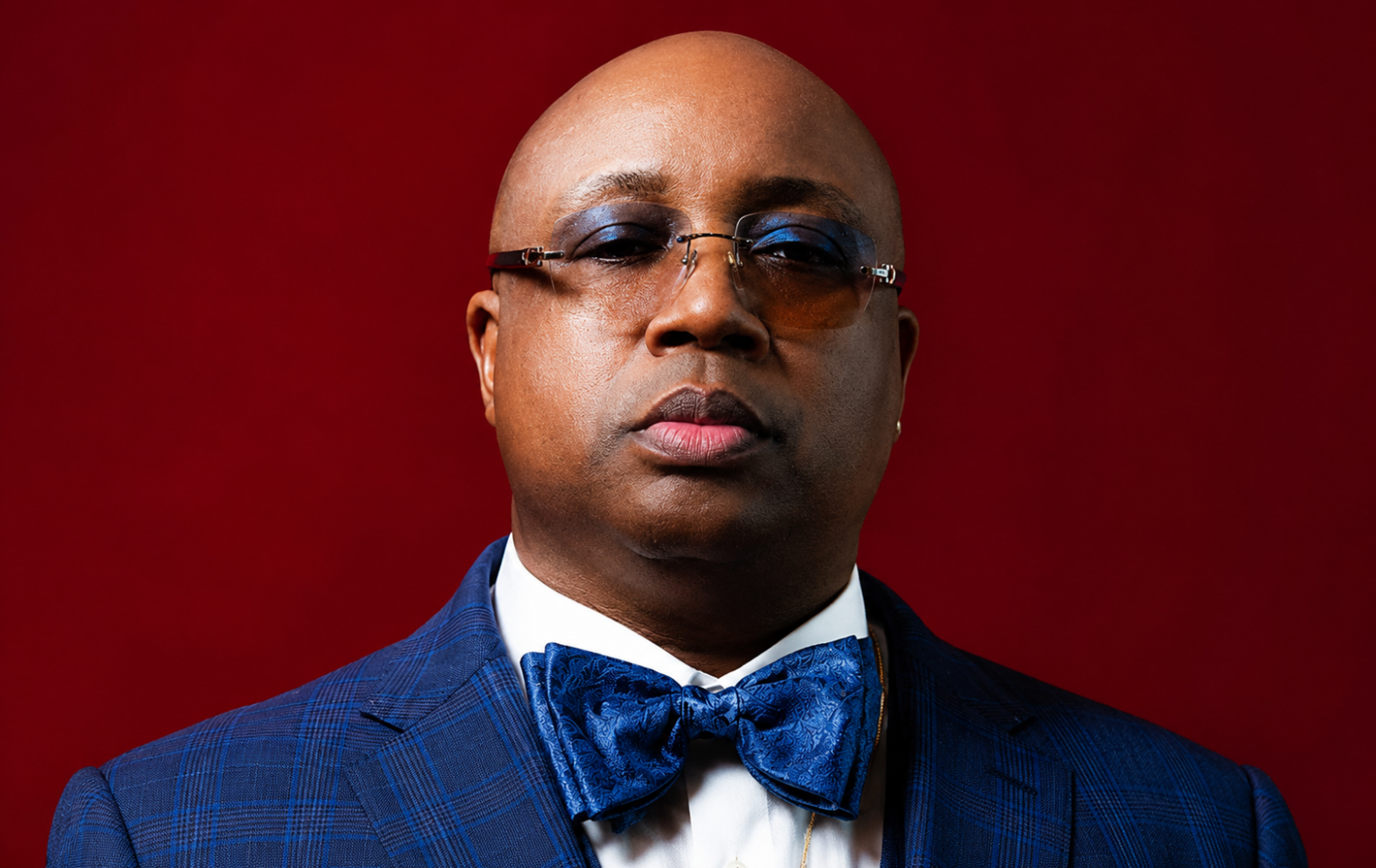
Ask five celebrity net worth trackers what E-40 is worth and you’ll get answers from $10 million to $215 million. That spread isn’t sloppiness — it’s the tell. E-40 (born Earl Stevens) built most of his modern wealth in a business those sites are bad at valuing: privately held liquor and wine brands with no public filings. So we’re going to do what the $10M template pages don’t: break down the beverage empire product by product, then reconcile why the estimates swing so wildly.
E-40 Net Worth 2026: Quick Facts
Estimated net worth (2026): ~$10 million (consensus figure across Celebrity Net Worth, TheRichest, and CelebsMoney). Outlier trackers push as high as $75M–$215M, mostly by attaching speculative brand-equity numbers to his beverage company.
- Real name: Earl Tywone Stevens
- Age: 58 (born November 15, 1967)
- Hometown: Vallejo, California (Bay Area)
- Primary income sources: Music catalog and royalties, Earl Stevens Selections (wine and spirits), real estate
- Flagship brands owned: Earl Stevens Selections wines, Sluricane RTD cocktails, E. Cuarenta Tequila, and a growing spirits lineup
Why Net Worth Estimates for E-40 Vary So Much
Here’s the honest version. Most net worth sites build their number the same way: add up known album sales, tack on a real estate estimate, and round. That approach lands on roughly $10 million for E-40 — and for his music-and-property assets alone, that’s a defensible figure.
The problem is what it ignores. Earl Stevens Selections is a privately held beverage company. There are no earnings reports, no share price, no public revenue. When a tracker claims $75M or $215M, it’s almost always inflating the value of that brand equity with a guess. When a tracker says $10M, it’s usually valuing the brand at close to zero. Neither is measuring the same thing.
So treat how much E-40 is worth as a range, not a point. The music-and-real-estate floor is real and roughly $10M. The beverage business is the wildcard that could justify a materially higher number if the brands were ever sold or independently audited — we just don’t have the receipts to prove the high end.
How E-40 Built His Fortune: From Trunk Hustler to Mogul
Long before streaming, E-40 was an independent-label case study. In the late 1980s he and family members formed The Click and launched Sick Wid It Records, selling cassettes out of car trunks across Northern California. That DIY distribution instinct — own the product, control the margin — is the through-line of his entire career.
The break came in 1994, when Jive Records signed a distribution deal reportedly worth around $3.5 million while letting him keep the Sick Wid It imprint. That’s the deal that turned a regional hustler into a national artist without surrendering ownership.
His mainstream commercial peak arrived in 2006 with “Tell Me When to Go,” the hyphy anthem that pushed him onto national radio and MTV. Across 30-plus studio albums, E-40 built a deep catalog that still generates royalty and streaming income today. But catalog money fluctuates, and E-40 clearly noticed. His next move is the real story.
Inside Earl Stevens Selections: The Real Wealth Driver
In 2013, E-40 launched Earl Stevens Selections and started treating alcohol the way he’d once treated cassettes — as a product to own outright and distribute at scale. More than a decade later, it’s the most durable asset he has, because unlike a hit single, a bottle on a Costco shelf sells whether or not he drops an album that year.
Here’s the full lineup competitors keep skipping — and what each piece contributes to the E-40 wine business and broader portfolio:
- Wines (the foundation): The line launched with a Moscato and now spans Chardonnay, a Red Blend called “Function,” and Cabernet. Wine was the proof of concept — approachable price points, big retail placement, and the volume that made retailers take the brand seriously.
- Sluricane (the growth engine): A ready-to-drink, spirit-based cocktail line. RTD is the fastest-growing category in beverage alcohol, and Sluricane is E-40’s play for it. More on this below.
- E. Cuarenta Tequila: His entry into the premium agave category — the same lane that made other celebrity spirits fortunes.
- Tycoon Cognac: A nod to the Hennessy-heavy culture of hip-hop, but owned rather than endorsed.
- Kuiper Belt Bourbon and Gin: Brown spirits and gin round out the bar so a retailer can stock a full Earl Stevens set, not a single SKU.
- E. Cuarenta Cerveza (beer/lager): The everyday-volume play that keeps the brand in front of casual buyers.
The reason this matters for net worth: Earl Stevens Selections reaches major national retail. Products have appeared in Costco, Safeway, and BevMo, which is the clearest evidence of scale you can get without private financials. Getting onto a Costco pallet program isn’t a vanity placement — it requires volume most celebrity vanity brands never hit. That distribution footprint is why the beverage business is more stable income than music: it’s recurring, retailer-driven, and largely independent of his release schedule.
Sluricane: The Product Named After His Own Hit
Sluricane is the clearest example of E-40 turning intellectual property into a physical product. The name traces back to The Click’s music, and E-40 built it into a ready-to-drink cocktail brand — roughly 40 proof, sold in flavored, grab-and-go formats built for the same crowd that buys his music.
The marketing is nearly free: the products appear in his videos and social content, so every song does double duty as an ad. In a beverage market where new brands spend millions to buy awareness, E-40 already owns the audience. That’s the structural advantage generic trackers miss when they slap a flat $10M on him — his content channel and his product line feed each other.
Real Estate and Other Investments
E-40’s most-cited hard asset is his Danville, California estate in the affluent East Bay. He bought the land in 1996 (reportedly around $625,000) and built a home now commonly estimated at $5 million or more — a textbook example of buying early in a market that boomed.
Not every venture worked, and that’s worth being straight about. Over the years he’s been tied to a Fatburger franchise, a Wingstop deal, a “40 Water” energy drink, the Ambassador’s Lounge nightclub, and the “Goon With A Spoon” food line. Several fizzled. The pattern is telling: E-40 throws a lot of entrepreneurial bets, and the beverage business is the one that stuck because he treated it like an operating company, not a licensing cash-grab.
How E-40 Stacks Up Against Other Hip-Hop Entrepreneurs
Context helps. Diddy built Ciroc into a fortune largely through a marketing partnership with Diageo. Jay-Z sold his Armand de Brignac champagne and D’Ussé cognac stakes for enormous sums. Master P was the original blueprint for artist-owned distribution.
E-40’s approach is different in one important way: it’s self-funded and self-owned, built slowly over more than a decade rather than through a single mega-partnership. That’s why his headline net worth is smaller than Jay-Z’s or Diddy’s nine- and ten-figure numbers — he never took the big-corporate-partner payday. But it also means he owns his brands outright, which is exactly why the beverage equity is so hard to value from the outside. If you’re mapping how independent artists convert audience into ownership, it rhymes with the way Junior H built his corridos tumbados fortune and how DD Osama turned an early rap career into diversified income — own the catalog, then bolt a business onto the audience.
For a different playbook entirely — a personality who franchised his name into a full brand empire — see our breakdown of Bear Grylls’ net worth. The common thread across all of them: the fortune isn’t the fame, it’s what you own around it.
So What Is E-40 Actually Worth?
The most defensible answer for E-40 net worth in 2026 is a documented floor of about $10 million from music and real estate, plus a beverage business whose true value is unknown but potentially far larger. Anyone quoting a hard $215M is guessing at the brand; anyone quoting a flat $10M is pretending the brand is worthless. The truth sits in between — and the direction of travel, thanks to Earl Stevens Selections and Sluricane, is up.
FAQs
What is E-40’s net worth in 2026?
Most trackers estimate E-40’s net worth at around $10 million in 2026, based on his music catalog and real estate. That figure likely undercounts his privately held beverage business, Earl Stevens Selections, which some outlier estimates value much higher — pushing total claims as high as $75M to $215M.
How did E-40 make most of his money?
E-40 built his early wealth through independent music — selling cassettes out of car trunks, a 1994 Jive Records distribution deal worth about $3.5 million, and 30-plus albums. Today his most durable income comes from Earl Stevens Selections, his wine and spirits company, plus a Danville, California estate that has appreciated substantially since 1996.
What alcohol brands does E-40 own?
E-40 owns Earl Stevens Selections, which includes wines (Moscato, Chardonnay, Cabernet, and the ‘Function’ red blend), Sluricane ready-to-drink cocktails, E. Cuarenta Tequila, Tycoon Cognac, Kuiper Belt Bourbon and Gin, and E. Cuarenta beer. They’re distributed through major retailers like Costco, Safeway, and BevMo.
Is Sluricane made by E-40?
Yes. Sluricane is a ready-to-drink, spirit-based cocktail line owned by E-40 under his Earl Stevens Selections brand. The name ties back to his music, and he markets it heavily through his own videos and social content, giving it built-in reach most new beverage brands have to pay millions for.
How much is E-40 worth according to Forbes?
Forbes has not published a dedicated net worth figure for E-40. The widely cited ~$10 million number comes from celebrity net worth trackers like Celebrity Net Worth, not Forbes. Because his beverage brands are privately held with no public financials, any precise figure — high or low — is an estimate.
Is E-40 richer than other Bay Area rappers?
E-40 is among the wealthiest and most business-savvy Bay Area rap figures, largely because of his beverage empire rather than music alone. Compared to national peers like Jay-Z or Diddy his headline number is smaller, but he owns his brands outright instead of relying on a single corporate partnership.