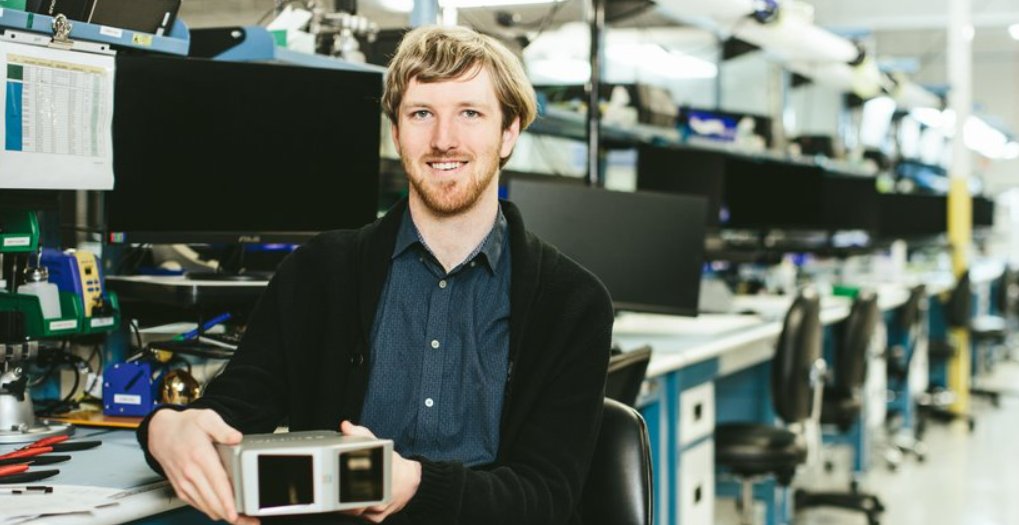
Most 17-year-olds are still trying to figure out what they want to do with their lives. Austin Russell was trying to solve a problem that could change how cars understand the road.
That contrast is a big reason people still search for Austin Russell Luminar today. His story is not the usual startup tale built on quick hype, flashy marketing, or a simple consumer app. It is the story of a young founder who went after a hard technical problem, stayed focused on it for years, and turned Luminar into one of the most talked-about names in automotive sensing technology.
What made Russell stand out was not just his age. It was the kind of company he chose to build. Luminar entered a field where the stakes were high, the technology was difficult, and the customers expected real-world performance, not just bold promises. In a space crowded with big claims about autonomy, Luminar built its name around lidar, vehicle perception, and the larger mission of making roads safer.
Who Is Austin Russell and Why Did So Many People Start Paying Attention to Him?
Austin Russell became widely known because he did something very few young founders manage to do. He did not just launch a startup. He built a deep-tech company in a space tied to the future of transportation, automotive safety, and self-driving systems.
From an early age, Russell was drawn to science, optics, and engineering. That technical curiosity became the foundation of Luminar. Instead of chasing an easy market, he focused on perception technology and the way vehicles detect distance, movement, and objects around them. That may sound highly specialized, but that was exactly the point. He was not trying to build something trendy. He was trying to build something useful.
A lot of startup founders get attention because they are good at storytelling. Russell got attention because people saw that he was working on a difficult problem with real-world consequences. If self-driving technology was going to become more reliable, safer, and more practical, vehicle sensing had to improve. Luminar was built around that belief.
His rise also caught public attention because of the milestones attached to his name. He founded Luminar as a teenager, was associated with the Thiel Fellowship, helped take the company public, and became known as one of the youngest self-made billionaires in the world. Those milestones turned him into a major business profile, but the bigger reason his story stuck was the seriousness of the company behind it.
How Austin Russell Started Luminar at Just 17
Luminar was founded when Austin Russell was just 17 years old. That fact alone is enough to make people stop and look closer, but age is only one part of the story. The more interesting part is what he chose to build at that age.
Many young founders begin with ideas that are fast, lightweight, and easy to launch. Russell went in the opposite direction. He focused on lidar technology and the broader challenge of helping vehicles see the world more clearly. That meant entering a field that required technical depth, patience, research, and long development cycles.
In the early years, Luminar stayed relatively quiet compared to louder startup brands. That helped shape the company’s identity. Instead of trying to win the internet, it worked on the product. That matters because in automotive technology, credibility comes from performance, not just visibility. Carmakers do not care much about startup buzz if the technology cannot survive real driving conditions.
Starting at 17 also gave Russell a different kind of edge. He had the freedom to think long term. He was young enough to bet years of his life on a difficult category without needing immediate validation. That kind of patience is rare, and it helped Luminar grow with a strong sense of purpose.
Why Luminar Chose Lidar When the Market Was Still Full of Doubts
To understand Luminar’s rise, it helps to understand why lidar became such a central part of the company’s story.
Lidar is a sensing technology that uses laser light to measure distance and build a detailed picture of the environment around a vehicle. In simple terms, it helps a car detect what is ahead, how far away it is, and how that environment is changing in real time. In self-driving and advanced driver-assistance systems, that kind of awareness is a big deal.
For years, there was constant debate over whether lidar would truly matter in the future of autonomy. Some people believed camera-based systems would be enough. Others argued that safer, more reliable vehicle perception would require a combination of sensors, including radar, cameras, and lidar.
Austin Russell clearly believed that lidar had a major role to play. Luminar built its identity around the idea that better sensing could support both autonomy and safety. That was a bold bet because the market was still uncertain, and the technology was not easy to commercialize. It had to be accurate, scalable, automotive-grade, and practical enough for production vehicles.
That is where Luminar’s positioning became important. The company was not just talking about futuristic robotaxis. It pushed the idea that lidar could become part of mainstream vehicles and help improve safety long before full autonomy became normal.
The Problem Austin Russell Was Really Trying to Solve
It would be easy to reduce this story to a simple headline about a teenager building a billion-dollar company. But the deeper story is about the problem Russell wanted to solve.
At its core, Luminar was built around vehicle perception and road safety. The company’s technology was meant to help cars detect hazards earlier, respond with better awareness, and support systems designed to reduce collisions. That mission gave the business a stronger foundation than pure futurism.
A lot of companies in the self-driving world have sounded impressive in presentations. The harder part has always been making the technology useful in real conditions. Roads are unpredictable. Weather changes. Lighting changes. Human behavior is messy. If a vehicle is going to make better decisions, it needs better data about the world around it.
That is why Russell’s original vision mattered. He was not only interested in autonomy as a buzzword. He was interested in what it would take to make vehicles smarter and safer. That sounds less dramatic than the dream of fully driverless cars, but in many ways it is the more practical and more valuable problem to solve.
From Young Founder to Serious Industry Player
Building a startup is one thing. Getting the automotive industry to take you seriously is something else entirely.
That was one of Austin Russell’s biggest achievements with Luminar. Over time, the company moved from being an ambitious startup into a recognized player in automotive technology. That shift did not happen because of age-based headlines. It happened because Luminar showed that it could speak the language of the industry: performance, production, partnerships, and scale.
This is where many deep-tech startups struggle. They may have an exciting concept, but turning that concept into something automakers can trust is a completely different challenge. Vehicle platforms move slowly. Safety standards are strict. Supply chains are complicated. Winning confidence in that environment requires much more than vision.
Luminar’s growing relationship with major automotive names helped change the conversation around the company. Once a startup begins to appear in real production plans and serious industry discussions, it stops looking like a speculative idea and starts looking like a company with staying power.
For Russell, that shift mattered. It proved he was not just a young founder with a compelling biography. He was someone who had built a company serious enough to matter in one of the world’s toughest industries.
The Big Break That Put Austin Russell and Luminar on the Map
Every founder story has a moment when it becomes impossible to ignore. For Austin Russell and Luminar, that moment came when the company entered the public market.
Going public changed the scale of the story overnight. It pulled Luminar out of a more technical business conversation and into the wider public spotlight. Suddenly, more people were paying attention to Russell, to Luminar’s technology, and to the larger market for autonomous driving and automotive safety systems.
That moment also turned Russell into one of the best-known young entrepreneurs in tech. The billionaire headlines amplified his profile, but they also introduced Luminar to a broader audience that may not have followed lidar, ADAS, or machine perception before.
Still, the public listing mattered for more than media attention. It signaled that Luminar had moved into a new phase. The company was no longer just a promising startup story. It was now expected to prove that its technology, partnerships, and business strategy could hold up under much closer scrutiny.
That kind of transition is not easy. Public markets raise expectations quickly. But in terms of visibility, credibility, and brand recognition, it was one of the biggest milestones in Russell’s journey.
What Made Luminar Different From Other Self-Driving Tech Companies
One reason the Austin Russell Luminar story stayed interesting is that Luminar never felt exactly like the average self-driving startup.
For one thing, the company’s focus was grounded in sensing and safety. It was not trying to win attention by promising overnight transformation. It was trying to build enabling technology that could fit into production vehicles and improve what cars could detect on the road.
That gave Luminar a more practical identity. While some companies leaned heavily into futuristic branding, Luminar positioned itself around automotive-grade lidar, long-range perception, and real partnerships with automakers. That made the company feel closer to the actual future of mobility, not just the imagined one.
It also helped that Luminar sat at the intersection of hardware, software, and automotive integration. This was not a lightweight startup category. It was a difficult business that demanded technical ambition, manufacturing discipline, and the ability to work inside a large industry ecosystem.
That combination is a big part of why Luminar became one of the best-known names in self-driving tech. It was tackling a hard problem in a way that felt grounded, serious, and increasingly relevant.
Austin Russell’s Biggest Achievements With Luminar
When people search for Austin Russell, they are usually looking for more than a short founder bio. They want to understand what he actually achieved.
The first obvious achievement is starting Luminar at such a young age and turning it into a real company in a difficult field. That alone makes his story unusual.
The second is that he helped build one of the most recognized brands in automotive lidar. In a complex market full of technical claims, Luminar became a name people could identify.
The third major achievement is taking the company public and turning it into a public-market story, not just a private startup one. That changed the level of exposure, accountability, and recognition attached to both Russell and Luminar.
There is also the broader achievement of influence. Russell helped push lidar and vehicle perception into mainstream conversations about the future of transportation. Even people who do not follow deep tech closely often recognize his name because of how strongly his personal story became linked to the growth of Luminar.
And then there is the founder image itself. He became a symbol of what can happen when a young entrepreneur chooses depth over ease, technical risk over safe trends, and long-term execution over quick attention.
The Leadership Style Behind Austin Russell’s Rise
Austin Russell’s leadership style seemed to come from a mix of intensity, conviction, and technical focus.
He did not build his reputation around being the loudest personality in the room. His image was more closely tied to being a founder obsessed with solving a real engineering problem. That matters because some startup stories are driven mostly by charisma. This one was driven by technical ambition and a very clear sense of direction.
Russell also seemed willing to play the long game. That is not a small thing in the startup world, where founders are often pushed toward speed, growth hacks, and fast narratives. Building something in automotive technology usually takes far longer. It demands patience, resilience, and a willingness to keep working even when the public is not paying attention.
That type of leadership can be especially powerful in deep tech. Teams need to believe the mission is worth the difficulty. Partners need to trust that the founder understands both the science and the market. Investors need to believe the company is building something that can actually scale.
Whether someone sees him as a visionary founder, a technical operator, or a young entrepreneur with unusual focus, it is clear that Russell’s leadership helped shape Luminar’s identity from the beginning.
What Entrepreneurs Can Learn From Austin Russell and Luminar
There are a few reasons this story keeps resonating beyond the automotive world.
The first lesson is that hard problems can create stronger businesses than easy ones. Russell did not go after a simple product category. He chose a technical challenge with real barriers to entry. That made the journey harder, but it also made Luminar more distinctive.
The second lesson is that youth can be an advantage when it comes with obsession and clarity. Starting at 17 sounds impressive, but what really matters is that Russell paired early ambition with serious execution.
The third lesson is that credibility has to be earned. In industries like automotive technology, no one gives trust away easily. You build it through performance, persistence, and proof.
Another lesson is that visibility usually follows substance. Russell’s biggest headlines came later. The real work happened before the spotlight got brighter.
And maybe the most useful lesson of all is that founder success is rarely built in a straight line. Building something meaningful in deep tech takes years. It takes focus, patience, setbacks, and the ability to keep moving while the outside world only sees fragments of the full picture.
Why the Austin Russell Luminar Story Still Stands Out
Some founder stories fade once the headlines cool down. This one keeps holding attention because it combines several things people rarely see together.
It has the youth factor, which instantly makes the story memorable. It has the deep-tech angle, which gives it substance. It has real business milestones, which make it credible. And it has a larger mission tied to safer roads, smarter vehicles, and the future of mobility.
That combination is what made Luminar more than just another startup name. It became part of a bigger conversation about autonomy, sensing, and what it takes to move automotive technology forward.Austin Russell’s journey with Luminar still stands out because it was never just about being young and successful. It was about starting early, thinking long term, and building in a category where execution mattered more than hype.